Find your everyday balance
Your journey to
better nutrition
starts here.
Discover the Zone Diet, calculate your daily Zone blocks, and learn how to build balanced meals—one simple step at a time.
Free tools · No account needed · Your numbers stay private
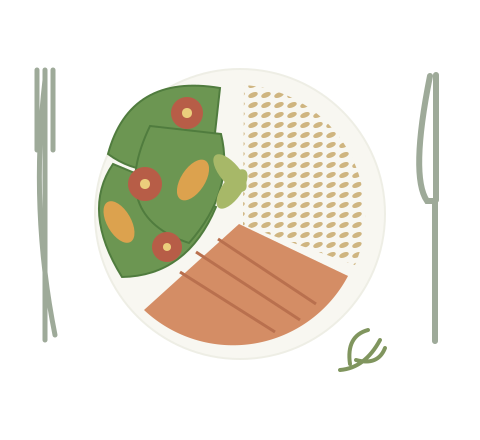
A little balance. Every day.
A simpler way to think about food
Less guesswork.
More understanding.
The Zone approach uses a 40% carbohydrate, 30% protein and 30% fat framework. Blocks turn that framework into smaller units you can use when thinking about meals.
Our tools help you explore those numbers. Our guides help you understand what they mean—without promising that one approach is right for everyone.
Get to know the method →From a number to your next meal
Plan it. Build it. Make it yours.
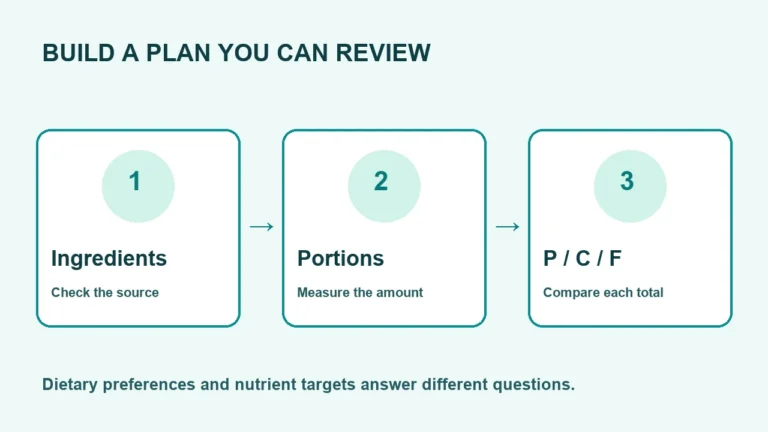
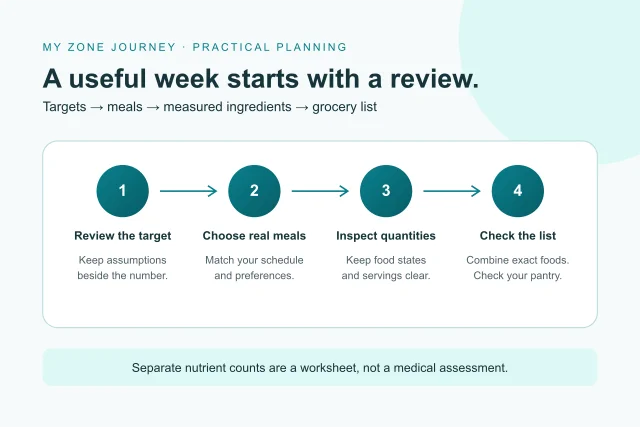
Free tools, no account required. Start with a target you choose, then inspect the food and quantities behind it.
Explore your daily blocks
Use the existing prescription calculation, with its assumptions and limitations clearly explained.
Open the Prescription Calculator →Build a meal, ingredient by ingredient
Search documented foods, change quantities and compare protein, carbohydrate and fat against your selected target.
Try the Visual Meal Builder →Give the week a starting point
Generate 1, 3, 7, 14 or 30 days of measured recipe ideas, swap meals and make a grocery list.
Open the Meal Planner → At your tablePractical recipes, visible estimates
Browse measured recipes, compare their separate block counts and adjust one portion without changing the saved recipe.
Explore the Recipe Library → Understand the portionsFind your way around food blocks
Learn the conventions before exploring source nutrients, exact preparation states and household measures.
Read the Food Block Guide → Look at the evidenceResearch with the limits included
Explore study summaries and source links. See which studies investigated the Zone Diet and which address broader questions.
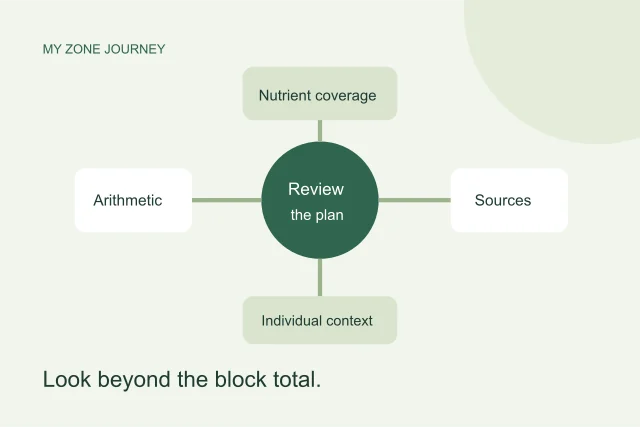
Visit the Research Center →These tools organize reference calculations and meal ideas. They do not assess nutritional adequacy, diagnose conditions or provide an individualized medical diet. Read the shared methodology.
Small units. A useful idea.
What exactly
is a Zone block?
A block is a way to count a measured amount of a nutrient. It is not the weight of the whole food.
Find your way around food blocks →Start with the building blocks.
The original food calculator uses these nutrient amounts:
Food weight varies. Fat conventions and carbohydrate fiber treatment need context—see the guide.
From the numbers to your table
Measured recipes.
Every ingredient accounted for.
Breakfast · Vegetarian Options
Apple Cottage Breakfast Bake
Apple with skin (raw), cottage cheese (2% milkfat) and oats (dry, unfortified) in an egg-bound oven bake. Measured ingredients, two servings and visible nutrition estimates.
3.14 protein3.61 available carb4.66 total fat (3 g)
View recipe and sources →Budget-Friendly · Quick Meals · Snacks · Vegetarian Options
Apple Peanut Butter Bites
Apple with skin (raw), peanut butter (smooth, no added salt) and sunflower seed kernels (dried) in a fruit snack. Measured ingredients, two servings and visible nutrition estimates.
0.67 protein2.01 available carb3.50 total fat (3 g)
View recipe and sources →Breakfast · Quick Meals · Vegetarian Options
Apple Ricotta Barley Breakfast Bowl
Pearled barley (cooked), ricotta cheese (part skim) and apple with skin (raw) in a grain or potato bowl. Measured ingredients, two servings and visible nutrition estimates.
2.27 protein5.05 available carb5.04 total fat (3 g)
View recipe and sources →Breakfast · Meal Preparation · Vegetarian Options
Apple Walnut Cottage Oats
Oats (dry, unfortified), cottage cheese (2% milkfat) and apple with skin (raw) in a chilled breakfast jar. Measured ingredients, two servings and visible nutrition estimates.
2.46 protein3.20 available carb3.38 total fat (3 g)
View recipe and sources →Generated serving illustrations. Nutrition is calculated from the listed ingredient weights, not the image.
Read the method and the evidence
Clear explanations.
Sources you can follow.
Explore what the Zone approach proposes, what trials have investigated, and where important uncertainties remain.
Explore the research guide → Our editorial approach →