
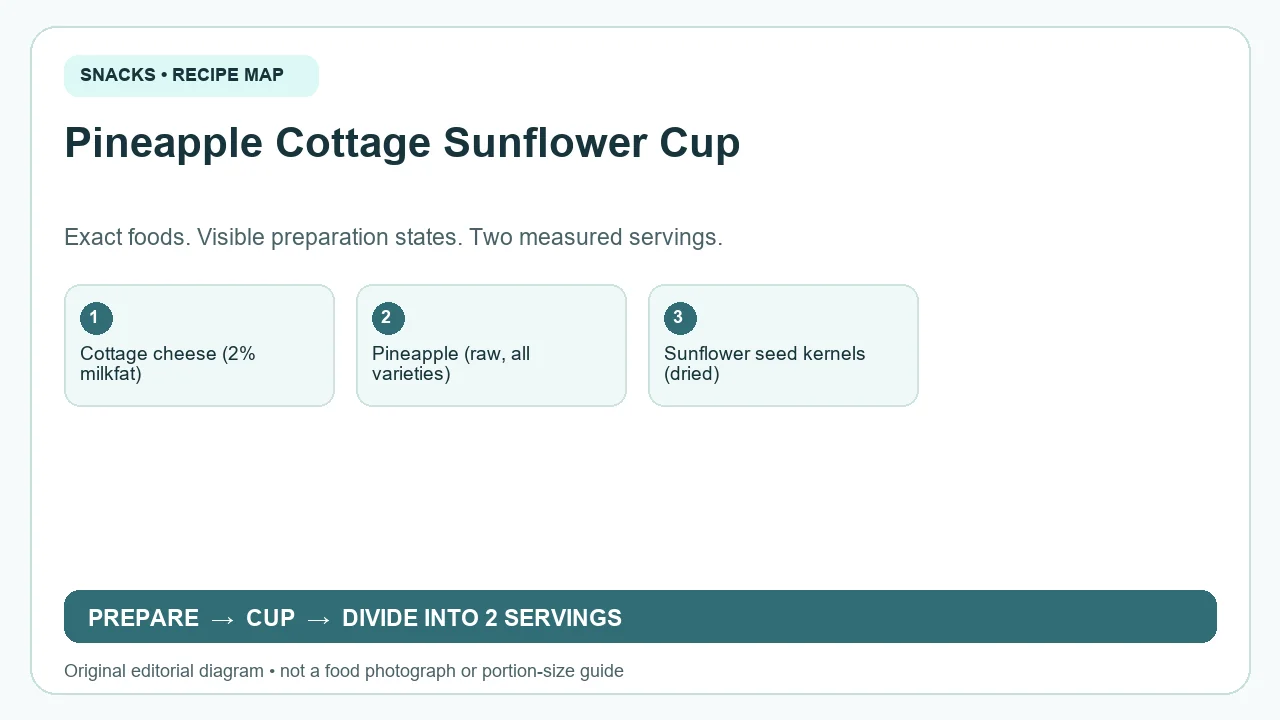
Cottage cheese (2% milkfat), pineapple (raw, all varieties) and sunflower seed kernels (dried) in a fruit-and-dairy cup. Measured ingredients, two servings and visible nutrition estimates.
This cup recipe brings cottage cheese (2% milkfat), pineapple (raw, all varieties) and sunflower seed kernels (dried) together as a fruit-and-dairy cup. The ingredient list describes the full batch; each serving is one half. Read the preparation labels before weighing so a cooked grain, drained fish or raw vegetable matches its source.
The separate protein, carbohydrate and fat counts are estimates, not a claim that this dish exactly meets a traditional Zone target. Use the meal builder for ingredient changes and the meal planner for a worksheet of recipe ideas.
Related ideas: Tomato Cottage Seed Plate · Chickpea Pumpkin Seed Dip.
Dietary information
Dietary filters for one original serving: Vegetarian ingredient pattern · Pescatarian ingredient pattern · Gluten-free ingredient pattern · Mediterranean-inspired ingredient pattern · Whole-food ingredient pattern. How these filters work
First, treat timing as an estimate, not a record of a tested kitchen session. Next, match the exact USDA ingredient states listed below when weighing the foods.
Measured ingredients
- 280.0 g Cottage cheese (2% milkfat)
USDA ingredient and calculator
Cheese, cottage, lowfat, 2% milkfat · FDC 172182 · Source dataset
Send this amount to the Food Calculator → - 220.0 g Pineapple (raw, all varieties)
USDA ingredient and calculator
Pineapple, raw, all varieties · FDC 169124 · Source dataset
Send this amount to the Food Calculator → - 20.0 g Sunflower seed kernels (dried)
USDA ingredient and calculator
Seeds, sunflower seed kernels, dried · FDC 170562 · Source dataset
Send this amount to the Food Calculator →
Make it step by step
- First, weigh every listed ingredient for the full two-serving batch in its exact starting preparation. Cooked grains, beans, vegetables, meat and fish are already cooked or drained as named; their initial cooking time is not included here.
- Next, wash and trim pineapple (raw, all varieties) before weighing the edible amount. Remove the inedible peel or rind from pineapple (raw, all varieties). Remove the pineapple core too. Keep all weighed edible flesh in the recipe.
- Then, divide cottage cheese (2% milkfat) between two cups or plates as the base or spread.
- After that, slice, dice or lightly crush pineapple (raw, all varieties) and arrange all of it over or beside the creamy base. For a fruit snack, spread the base over the cut fruit instead.
- Next, add the measured sunflower seed kernels (dried) as the final layer or topping.
- Finally, divide the complete batch equally into two servings by weight, including all measured toppings, sauce and oil. Serve promptly or follow the linked food-handling guidance for cooling, storage and reheating. Times are editorial estimates, not a record of physical kitchen testing.
Choose the size that works for you
Adjust your serving
Change the serving size below. Ingredient weights and all nutrient totals scale together. The original recipe stays the same.
Measured ingredients for this adjusted portion
These controls calculate a single adjusted portion from the recipe’s original yield. They do not change the saved recipe, its structured data, cooking method or estimated preparation time. No personal calculator entries are sent or stored.
Calculated per serving
Nutrition with the method attached.
- Energy (kcal)
- 227
- Protein (g)
- 17.3
- Total carbohydrate (g)
- 23.1
- Fiber (g)
- 2.4
- Available carbohydrate (g)
- 20.7
- Total fat (g)
- 8.5
Original added-fat equivalent (÷1.5): 5.64. This is a separate convention, not an extra fat allowance.
However, separate block counts do not mean this recipe is an exactly balanced Zone meal. The table shows total carbohydrate as well as carbohydrate minus fiber. In addition, we scale nutrients from USDA reference entries and sum them before rounding. These are estimates, not a laboratory analysis.
Source and preparation notes
Source-calculated starting-ingredient estimate, not laboratory analysis or physical kitchen testing. Cooked foods are weighed after cooking as named; raw vegetables, fruit and egg are weighed in their listed starting state. Cooking may change water and nutrient retention; no finished per100g concentration or cooking yield is claimed. Keep all measured oil/sauce with the batch. Total time includes stated chill/rest time, but excludes initial cooking of ingredients already named cooked. Product labels and substitutions require recalculation.
Keep the bigger picture in view.
Finally, these are reference calculations, not a personalized meal prescription. Read how the numbers work, explore the food database, or return to all recipes.
Take this portion into your plan.
Uses the portion factor selected above. All ingredients scale together; this does not correct differences between the three macro block counts.
Transfers use temporary storage in this browser. No body measurements or account are needed.