
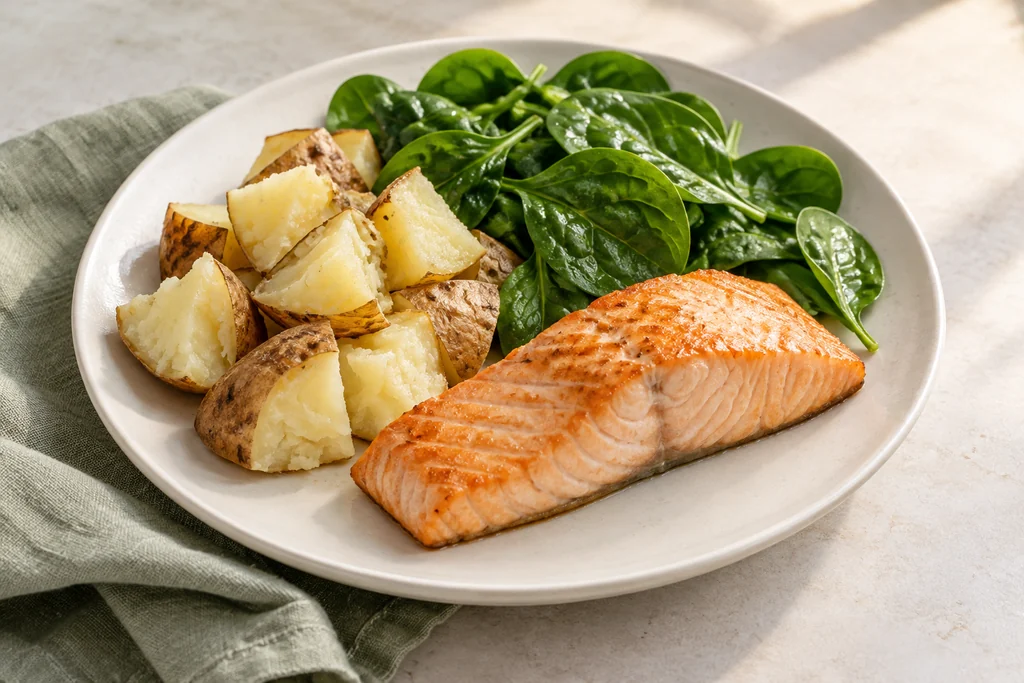
Salmon naturally contributes both protein and fat, which makes this plate a helpful example of why a food’s full nutrient profile matters. The calculation uses the USDA record for Atlantic farmed salmon cooked with dry heat, alongside baked potato with its skin.
Weigh the salmon and potato after cooking. Other salmon types and preparation methods can have different nutrient values. The recipe does not add oil or butter; any fat used during your own preparation would need to be counted separately.
Make the quantities work for your meal
Adjust one portion.
Start with one serving of this recipe, then change its size. Each nutrient changes together; increasing protein also changes carbohydrate, fat and energy.
Measured ingredients for this adjusted portion
These controls calculate a single adjusted portion from the recipe’s original yield. They do not change the saved recipe, its structured data, cooking method or estimated preparation time. No personal calculator entries are sent or stored.
Timing is an estimate, not a record of a tested kitchen session. Nutrition is calculated from the exact USDA ingredient states listed below.
Measured ingredients
- 85.0 g Atlantic farmed salmon, cooked with dry heat and weighed cooked
USDA ingredient and calculator
Fish, salmon, Atlantic, farmed, cooked, dry heat · FDC 175168 · Source dataset
Send this amount to the Food Calculator → - 150.0 g Baked potato flesh and skin, without salt, weighed cooked
USDA ingredient and calculator
Potatoes, baked, flesh and skin, without salt · FDC 170093 · Source dataset
Send this amount to the Food Calculator → - 50.0 g Raw spinach, washed and drained
USDA ingredient and calculator
Spinach, raw · FDC 168462 · Source dataset
Send this amount to the Food Calculator → - 15.0 g Raw lemon juice
USDA ingredient and calculator
Lemon juice, raw · FDC 167747 · Source dataset
Send this amount to the Food Calculator →
Make it step by step
- Use safely cooked salmon and baked potato made without additional oil or butter. Weigh the edible cooked portions and cut the potato into bite-size pieces. If preparing fish from raw first, cook it to 145°F (63°C) before measuring the cooked portion.
- If reheating previously cooked salmon and potato, heat evenly until leftovers reach 165°F (74°C). The listed heating time is an estimate and does not include cooking the original raw fish or baking the potato.
- Wash and drain the spinach, then arrange it on the plate with the cooked components. Drizzle the measured lemon juice over the food and serve.
Calculated per serving
Nutrition with the method attached.
- Energy (kcal)
- 329
- Protein (g)
- 24.0
- Total carbohydrate (g)
- 34.6
- Fiber (g)
- 4.4
- Available carbohydrate (g)
- 30.1
- Total fat (g)
- 10.9
Original added-fat equivalent (÷1.5): 7.28. This is a separate convention, not an extra fat allowance.
Separate block counts do not mean this recipe is an exactly balanced Zone meal. Total carbohydrate is shown as well as carbohydrate minus fiber. Nutrients are scaled from USDA reference entries and summed before rounding; they are estimates, not a laboratory analysis.
Source and preparation notes
Use the exact cooked food type named in the ingredient list for the closest comparison. If the salmon was cooked in oil or butter, add that ingredient to the estimate. The salmon’s own fat is counted. The displayed total-fat blocks are not a direction to add that many additional fat portions. This is an assembled-meal recipe; no raw-to-cooked yield conversion is assumed. Database-derived estimates, not laboratory analysis. Brands, foods and cooking methods vary. Cooked foods are weighed after cooking as named in the source record. Reheating may change water content; no finished per100g concentration or cooking yield is claimed. Times are editorial estimates; these recipes have not been kitchen-tested.
Keep the bigger picture in view.
These are reference calculations, not a personalized meal prescription. Read how the numbers work, explore the food database, or return to all recipes.