Meal preparation is an organizational skill. You can learn it without expecting every meal to look identical or every day to unfold exactly as planned.
For someone exploring Zone-style measurements, the first challenge is often not the arithmetic. It is finding a matching food record while cooking, remembering whether a weight was raw or cooked, or discovering that tomorrow’s meal has no suitable storage container. A practical workflow handles those problems before adding more targets.
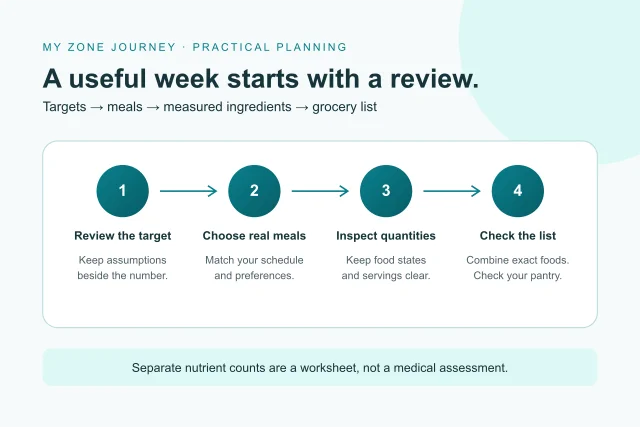
1. Plan around the week you actually have
List the meals you want to prepare at home and those you will need to carry. Check time, equipment, food preferences and refrigeration. Avoid planning a full week of unfamiliar dishes if you only have time to test one. A small plan that answers real constraints is more useful than an ambitious menu that depends on everything going right.
NIDDK guide to changing routines describes identifying barriers and planning manageable actions as part of changing routines. Here, that might mean preparing one reliable lunch or making a shopping list from two recipes. The purpose is to remove friction, not to earn a perfect block score.
2. Choose recipes you can reproduce
Look for exact ingredient measurements, stated preparation and cooking steps, and a clear serving count. Read the method beneath the nutrition information. A recipe’s block values should explain whether carbohydrate uses a fiber adjustment and whether fat is being described as added fat or total-fat equivalents.
Open the recipe library and choose a dish whose ingredients you can obtain. Do not assume that changing an ingredient preserves the original numbers. A different product, flavored ingredient, drained weight or cooking method may require a different data record. Keep your own substitution note instead of silently presenting the original calculation as unchanged.
3. Make the shopping list from actual quantities
Combine repeated ingredients across the selected recipes, while keeping their preparation requirements separate. A recipe calling for a cooked ingredient may not be asking for the same purchased weight as one using it raw. Check the instructions before adding quantities together.
Look in the refrigerator, freezer and pantry before shopping. FDA guide to reducing food waste recommends planning with the food already available and keeping track of items that need using. You can build that into a simple list with columns for “already have,” “buy” and “use first.” Avoid treating an uneaten ingredient as a moral failure; it is information for the next plan.
4. Set up one measurement station
Put scales, a bowl and your source notes in one place. Zero the container before weighing the edible ingredient. Record the food name, weight and state together—“cooked” or “raw” belongs beside the number, not in your memory.
Use the food database to inspect matching source records. If the source supplies a household portion with an applicable gram weight, you can use that conversion. Otherwise weigh the ingredient instead of assuming every cup has a universal mass. The portion-measurement guide explains this distinction in more detail.
5. Calculate the batch before dividing it
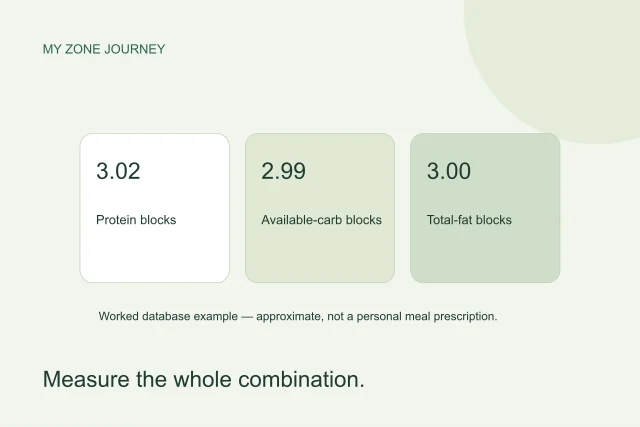
Scale each ingredient’s nutrients to the amount used, then add the ingredient contributions. Divide by the stated number of servings only after obtaining the batch totals. This keeps a small rounding difference from being multiplied repeatedly across ingredients.
If you divide the meal into containers by eye, the nutrition per container is an estimate based on equal division. If you want weight-based portions of a mixed batch, first establish its actual finished weight and mix it as evenly as the dish allows. A container count and a weighed cooked portion are two different serving definitions; label which one you used.
6. Store prepared food safely
Food safety matters regardless of the diet framework. The FDA safe-storage guidance advises keeping the refrigerator at or below 40°F (4°C), refrigerating perishables promptly, and observing the two-hour limit at room temperature—one hour above 90°F. Plan containers and cooling space before a large cooking session rather than leaving food waiting while you search for them.
For stored meals, the FDA guidance for stored meals gives a three-to-four-day refrigerator window for leftovers. Freeze suitable portions that you will not use within the applicable period. Keep a preparation date on containers and follow any more specific product or food-safety instruction. Smell and appearance are not substitutes for a safe time-and-temperature plan.
The USDA advice on reheating recommends reheating leftovers to 165°F throughout. Check with a food thermometer rather than relying on a warm container or a steaming surface. When microwaving, follow guidance on stirring, covering and standing time so that heating is more even. This article is a planning overview, not a replacement for the safety instructions for a particular ingredient or appliance.
7. Leave room for meals that are not prepped
Some days require a different plan. Keep a short list of easy meals whose ingredients and preparation you understand. A change of schedule does not mean you need to compensate by skipping food or forcing an inherited block allocation into the rest of the day.
The prescription tool now corrects the original metric conversion by default and retains a legacy comparison mode. Its inherited meal table still has identified limitations. Do not make the table more authoritative than your actual circumstances. The calculator can explain its existing formula; it cannot evaluate an individual’s hunger, medical needs or entire training schedule.
8. Review convenience as well as numbers
At the end of the week, ask which meals reheated well, which steps took too long and which ingredients were left over. Save the notes with the recipe. You might reduce the batch size, use a different container, or repeat a simpler dish rather than adding more complexity.
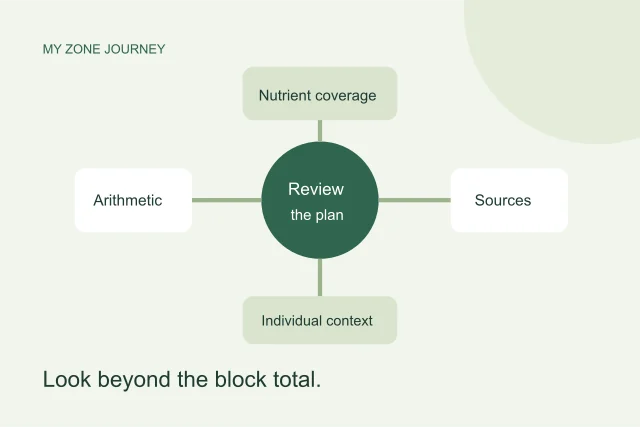
Also look beyond the macronutrient totals. The NHS food-pattern guide discusses dietary balance through a variety of food groups over time, not just matching one meal’s arithmetic. A meal-preparation routine should make a varied, appropriate eating pattern easier to carry out; it should not narrow your attention to only three displayed values.
Start with one useful improvement
Choose one recipe, verify one set of source records and prepare a manageable batch. Keep the measurements, serving definition and storage plan together. Once that is comfortable, add another meal. The value of the process is that you can understand, repeat and revise it—not that it claims a guaranteed health outcome.
Return to the planning guide for a shorter checklist, or open the food calculator when you want to investigate a single label. If you need a therapeutic eating plan, take these practical questions to a qualified professional rather than letting a general recipe determine your care.